
The first 24 hours with your hand reared baby parrot are critical for establishing trust and setting the foundation for a lifelong bond. This delicate transition period requires patience, understanding, and a calm approach. Your new feathered companion has just left the only environment it has ever known—the breeder’s nursery where it received regular feedings, consistent care, and familiar surroundings. Now, this vulnerable baby bird must adapt to new sights, sounds, smells, and most importantly, you as their new caregiver.
In this comprehensive guide, we’ll walk you through exactly what to expect and how to manage this crucial adjustment period. You’ll learn why minimizing stress is essential for your baby parrot’s physical and emotional wellbeing, how to create a nurturing environment, and the specific steps to follow during those first 24 hours. By understanding your parrot’s needs and following these evidence-based recommendations, you’ll help your new companion feel secure while building the foundation for a healthy, trusting relationship.
What Does “Hand Reared” Mean?
Hand rearing involves feeding a baby parrot formula from a syringe until it’s ready to wean onto solid foods
Before we dive into bringing your baby parrot home, it’s important to understand what “hand reared” actually means. Hand reared parrots are babies that have been fed and cared for by humans rather than their parents. This process typically begins when the chicks are between 2-3 weeks old, though some breeders may start from hatching. During this critical developmental period, the baby receives all its nutrition and care from human handlers.
Hand rearing involves feeding specially formulated baby bird formula through a syringe or spoon several times daily. The baby develops a feeding response—bobbing its head up and down—when the sides of its beak are gently touched. This mimics how parent birds would feed their young in the wild. As the baby grows, feedings become less frequent until the bird eventually weans onto solid foods.
The hand-rearing process creates birds that are comfortable with human handling and typically form strong bonds with their human caregivers. However, this transition from breeder to your home represents a significant change for the baby parrot. Understanding this background helps explain why the first 24 hours in your home require such careful management.
Before You Leave the Breeder
Proper preparation before collecting your hand reared baby parrot is essential for a smooth transition. The more information you gather and preparations you make before bringing your baby home, the less stressful the experience will be for both of you.
Essential Information to Collect
Ask the breeder to demonstrate a feeding session so you can observe the technique firsthand. Many reputable breeders will provide a small amount of their formula to help with the transition, as sudden changes in diet can upset a baby bird’s digestive system.
Essential Items to Prepare
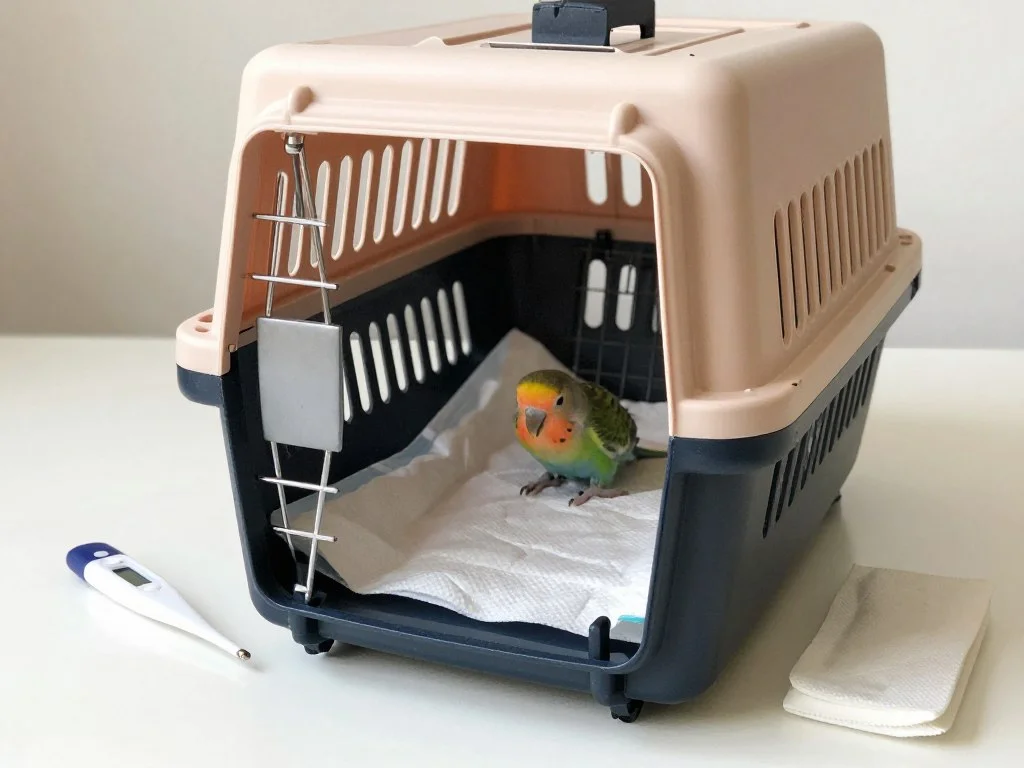
A properly prepared carrier is essential for safely transporting your new baby parrot
If you’re bringing home an African Grey or Cockatoo, be especially mindful of temperature regulation, as these species can be particularly sensitive to temperature changes when young.
The Car Ride Home
The journey from the breeder to your home represents the first major transition for your baby parrot. How you manage this trip can significantly impact how quickly your new companion settles into its new environment.
Carrier Setup
Your carrier should be small enough to provide security but large enough for the bird to move slightly. Line the bottom with paper towels or a soft cloth that can be easily changed if soiled. Avoid using loose materials like wood shavings that could be ingested or cause respiratory irritation.
Temperature and Noise Control
Baby parrots, especially those not fully feathered, need warmth. The carrier should be maintained at approximately 26-29°C (78-85°F). In cold weather, wrap the carrier (not covering ventilation holes) with a blanket or use hand warmers placed outside the carrier where the bird cannot reach them.
Keep the car environment calm and controlled:
Communication During Travel

Speaking softly to your baby parrot during transport can help provide reassurance
Should you talk to your baby parrot during the journey? The answer is yes, but with moderation. Speak in a soft, calm voice occasionally to provide reassurance. This helps the bird associate your voice with safety. However, constant chatter might be overwhelming, so balance periods of quiet with gentle reassurance.
What to Avoid During Travel
IMPORTANT: Never attempt to feed your baby parrot during transport. The risk of aspiration (food entering the airway) is significantly higher when feeding in a moving vehicle. Wait until you’re safely home before offering any food or water.
If you’re bringing home a Macaw, be prepared for potentially louder vocalizations during transport, as these larger species may be more vocal when experiencing new situations.
Arriving Home
The moment you arrive home marks another critical transition for your baby parrot. How you introduce your new companion to its environment will significantly impact how quickly it settles in.
Where to Place the Cage

Position your baby parrot’s cage in a quiet area away from drafts and direct sunlight
Select a location for your baby parrot’s cage that balances visibility with security:
The ideal room temperature should be between 21-26°C (70-78°F), which is comfortable for most parrot species. If your baby is not fully feathered, you may need to provide additional warmth within the cage using a heat lamp positioned so the bird can move away from it if desired.
Lighting and Room Choice
Natural light is beneficial, but avoid direct sunlight which can overheat the cage. A room with indirect natural light and the ability to control brightness is ideal. During the first 24 hours, maintain a moderate light level—not too bright, but not so dim that the bird cannot see its surroundings.
The best room choices are typically:
Avoid rooms with televisions or music systems that might suddenly produce loud noises. Also avoid laundry rooms (temperature fluctuations) and bathrooms (humidity changes).
The First Hour: Observation Before Interaction
Once you’ve placed the carrier near the cage, follow these steps:
- Sit quietly near the carrier for a few minutes
- Gently open the carrier and slowly reach in to lift the baby
- Transfer the baby to its cage with minimal handling
- Close the cage door and step back
- Allow the baby to observe its new surroundings without interference
During this first hour, your baby parrot needs time to process the significant changes it has experienced. Resist the urge to constantly check, talk to, or handle the bird. Instead, sit quietly nearby, occasionally speaking in soft tones so it becomes accustomed to your voice.
Your baby parrot will be using all its senses to evaluate its new environment. It needs to determine that this strange new place is safe before it can relax. Constant interaction during this period can overwhelm its sensory processing abilities.
If you’ve brought home a Conure, you might notice they adapt quite quickly to new environments compared to some larger species, but still require this initial adjustment period.
The First Few Hours
After the initial settling-in period, the next few hours are about establishing a sense of security and beginning to build trust with your baby parrot.
Minimal Handling: Quality Over Quantity

When handling is necessary, use gentle, supportive techniques that make your baby parrot feel secure
During the first few hours, handling should be limited to essential care only. If your baby needs feeding, approach this calmly and efficiently:
Remember that even though hand reared baby parrots are accustomed to human contact, the stress of relocation means they need time to adjust to you specifically as their new caregiver.
Signs of Stress vs. Comfort
Learning to recognize your baby parrot’s body language is essential for responding appropriately to its needs. Here’s what to watch for:
Signs of Stress
Signs of Comfort
If you observe signs of stress, reduce stimulation immediately. Step back, lower your voice, and give the bird more space. Conversely, signs of comfort indicate you can continue with gentle interaction, though still keeping it brief during these first hours.
The First Feeding

Maintain the same feeding technique used by the breeder to minimize stress during the first feeding
The first feeding in your home is a significant milestone. Approach it methodically:
- Prepare the formula exactly as the breeder instructed
- Check the temperature with a thermometer (typically 38-40°C or 100-104°F)
- Test a small amount on your wrist to ensure it’s not too hot
- Handle the baby gently but confidently
- Position your hands exactly as the breeder demonstrated
- Start with a smaller amount than usual for this first feeding
- Watch for the feeding response (head bobbing)
- Feed slowly and carefully, allowing the baby to swallow between mouthfuls
Never force feed a reluctant baby parrot. If your baby refuses to eat during the first feeding attempt, wait 30-60 minutes and try again. Stress can temporarily suppress appetite, but a hungry baby will eventually eat.
For species like the Eclectus, which can be particularly sensitive to dietary changes, maintaining consistency with the breeder’s formula and feeding technique is especially important.
The First Night
The first night in a new home can be particularly challenging for a baby parrot. In the wild, nighttime represents vulnerability, and this instinctive awareness remains even in hand reared birds.
Sleeping Arrangements

A partial cage cover can help your baby parrot feel secure during its first night
Creating the right sleeping environment is crucial for your baby parrot’s first night:
Some baby parrots sleep better with a small, safe comfort item in their cage, such as a soft, clean cloth. However, avoid items with loose threads or materials that could be ingested.
Lighting and Quiet
Parrots are diurnal creatures that need darkness to sleep properly, but complete darkness can be disorienting for a baby in a new environment:
If you need to check on your baby during the night, use a dim light source and move slowly to avoid startling it.
Normal Baby Behaviour at Night

A sleeping baby parrot will typically appear slightly fluffed with eyes closed or partially closed
Understanding what constitutes normal behaviour will help you distinguish between adjustment issues and genuine problems:
Concerning behaviours that might warrant attention include:
If you’re concerned about your baby’s behaviour during the night, resist the urge to immediately intervene. Often, giving the bird a few minutes to self-settle is more beneficial than creating additional disturbance. However, if signs of genuine distress persist, a gentle check with minimal disruption is appropriate.
Many baby parrots will naturally wake for an early morning feeding, sometimes as early as dawn. Be prepared for this natural rhythm and have formula ready to prepare quickly if needed.
Why You Shouldn’t Overwhelm Your Baby Parrot
Understanding the science behind stress responses in parrots helps explain why a calm, measured approach during the first 24 hours is so important for your baby’s long-term wellbeing.
The Stress Response in Parrots

Stress triggers physiological responses that can impact your baby parrot’s health and development
When a baby parrot experiences stress, its body releases hormones like corticosterone (the bird equivalent of cortisol in humans). These stress hormones trigger a cascade of physiological responses:
While these responses are adaptive for short-term threats in the wild, prolonged or repeated stress during the critical developmental period can have lasting negative effects.
Long-term Behavioural Impact
Research in avian behaviour has shown that early experiences significantly shape a parrot’s future behavioural patterns. Overwhelming a baby parrot during its first days in a new home can contribute to:
Conversely, a calm, predictable introduction to your home helps establish neural pathways associated with security and positive social interaction.
The Importance of Routine and Calm Bonding

Passive bonding activities like quietly reading near the cage help build trust without overwhelming your baby parrot
Establishing a consistent routine from day one provides your baby parrot with predictability in an otherwise novel environment. This predictability serves as an anchor, helping the bird develop confidence as it learns what to expect.
Effective bonding during the first 24 hours often involves:
This approach lays the groundwork for a relationship based on trust rather than fear or overwhelming stimulation. Remember that you have years ahead to develop a close bond—these first 24 hours are about establishing safety and security.
“The quality of interaction matters far more than the quantity, especially during a baby parrot’s transition to a new home. Patience now yields trust later.”
Common First-Day Mistakes to Avoid
Even with the best intentions, new parrot owners often make mistakes during those crucial first 24 hours. Being aware of these common pitfalls can help you avoid them.
Introducing Too Many People

Avoid introducing your baby parrot to multiple people during the first 24 hours
It’s natural to be excited about your new family member and want to share this joy with friends and family. However, introducing multiple people on the first day can be overwhelming for your baby parrot.
Better approach: Limit interaction to 1-2 primary caregivers during the first 24 hours. Gradually introduce other household members one at a time over subsequent days.
Excessive Handling
Hand reared baby parrots are accustomed to human handling, which sometimes leads new owners to believe frequent handling from day one is beneficial. However, excessive handling during the transition period can be counterproductive.
Better approach: Limit handling to necessary care (feeding, basic health checks). Increase handling gradually as the bird shows signs of comfort and security in its new environment.
Environmental Overstimulation

Create a calm environment with minimal stimulation during your baby parrot’s first 24 hours
Modern homes contain many stimuli that can overwhelm a baby parrot’s developing nervous system:
Better approach: Create a calm “sanctuary space” for your bird’s first days. Introduce normal household activities gradually, starting with the quietest and least disruptive.
Disrupting Established Feeding Routines
Attempting to change feeding schedules, techniques, or formulas during the first 24 hours can create unnecessary stress and potentially lead to nutritional issues.
Better approach: Maintain the exact feeding routine used by the breeder for at least the first few days. Make any necessary changes gradually after the bird has settled.
Expecting Too Much Too Soon

Patience and realistic expectations are key during your baby parrot’s adjustment period
Many new owners have expectations of immediate bonding, training, or interaction that simply aren’t realistic during the transition period.
Better approach: Focus on creating safety and predictability. View any positive interaction as a bonus, not an expectation. Remember that trust develops over time through consistent, positive experiences.
“The first day is about the bird’s needs, not the owner’s desires. Meeting those needs lays the foundation for everything that follows.”
Conclusion: Building a Foundation of Trust

A successful first day creates the foundation for a lifetime of trust and companionship
The first 24 hours with your hand reared baby parrot set the tone for your entire relationship. By prioritizing your bird’s need for security, predictability, and gentle transition, you’re laying the groundwork for a strong, trusting bond that will develop over the coming weeks and months.
Remember that bringing home a baby parrot is not about immediate gratification but about beginning a relationship that could span decades. The patience and understanding you demonstrate during these critical first hours will be rewarded many times over as your feathered companion grows into a confident, well-adjusted adult bird.
Focus on these key principles as you navigate the first day:
With each passing day, your baby parrot will become more comfortable, more confident, and more engaged with you and its new environment. The restraint and thoughtfulness you show during these first 24 hours are your first and perhaps most important gifts to your new companion.
Ready to Welcome a Hand Reared Baby Parrot?
At Pure Feather Aviary, we specialise in raising healthy, well-socialised baby parrots that make wonderful companions. Our hand rearing process focuses on creating confident, trusting birds ready to bond with their new families.
For more information about parrot care and behaviour, we recommend visiting the World Parrot Trust’s reference library, which provides evidence-based resources for parrot owners.